MLZ is a cooperation between:
 > Technische Universität München
 > Helmholtz-Zentrum Hereon
 > Forschungszentrum Jülich
MLZ is a member of:
 > LENS
 > ERF-AISBL
MLZ on social media:




MLZ (eng)
Lichtenbergstr.1
85748 Garching
Newsletter I/2026
Jump directly to the chapters! (and don't forget to enlarge the pictures by clicking them!)
» Working on Projects» Instruments» People» UsersWorking on Projects
€7.6 million for research with neutrons and positrons
Ten scientific projects at the Heinz Maier-Leibnitz Zentrum (MLZ) are being funded with around €7.6 million by the Federal Ministry of Research, Technology and Space (BMFTR). The funding began in January 2026 as part of the so-called ErUM-Pro programme, for a period of three years. ErUM stands for ‘Exploration of the Universe and Matter’.
Six projects at the positron source
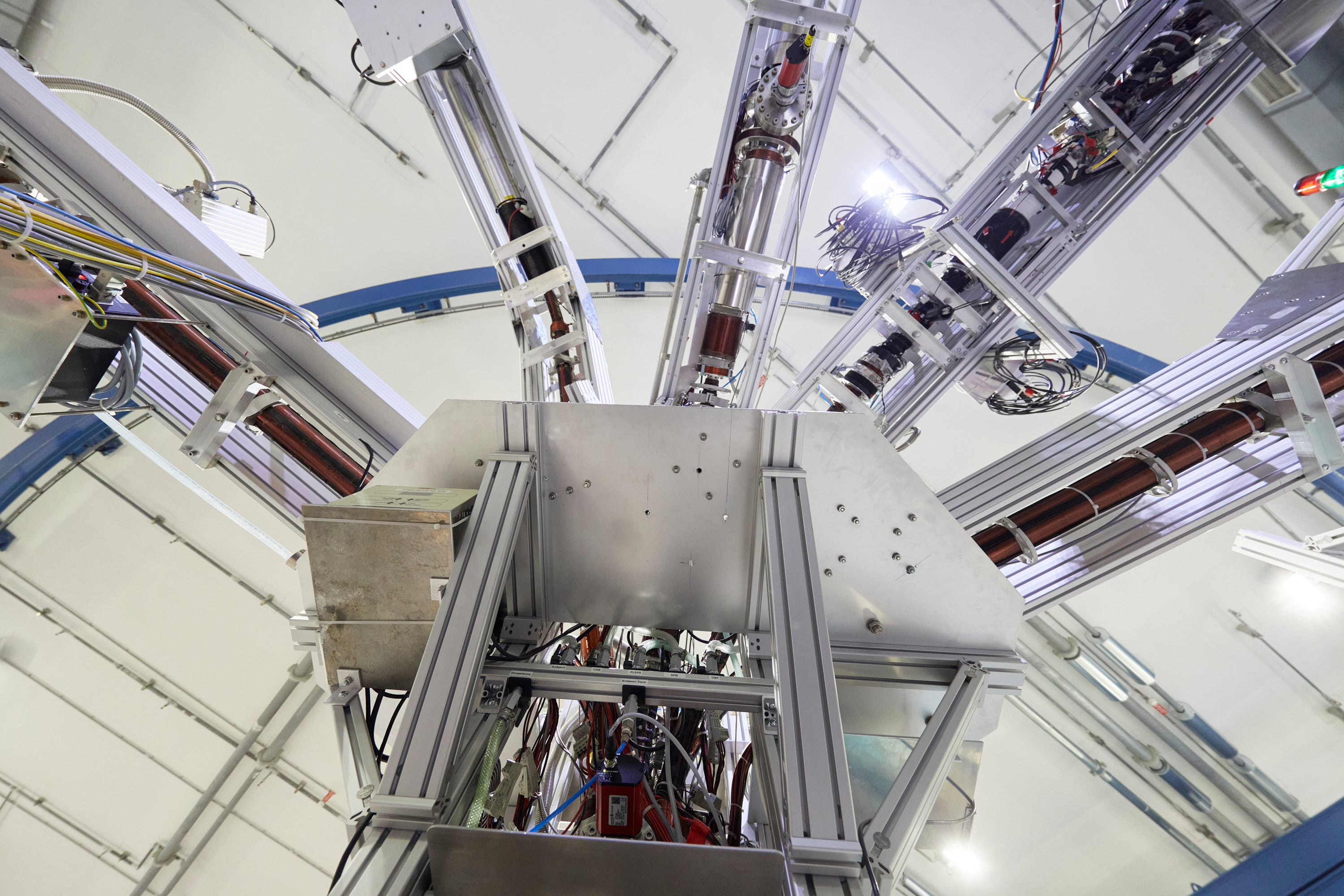
NEPOMUC's 5-fold switch in the Experimental Hall. © Bernhard Ludewig, FRM II / TUM
Prof. Dr Christoph Hugenschmidt from Technical University of Munich (TUM) is delighted that no fewer than six projects, totalling just under €4.7 million, will benefit NEPOMUC, the world’s most intense positron source at FRM II. One project involves replacing the Anger cameras at NEPOMUC with new detectors. Thanks to them, scattered photons can be measured with three times higher spatial resolution.
The SuSpect (Surface Spectrometer) project will “measure both structure and element concentration on a single sample surface”, says Christoph Hugenschmidt.
Identifying defects as accurately as possible
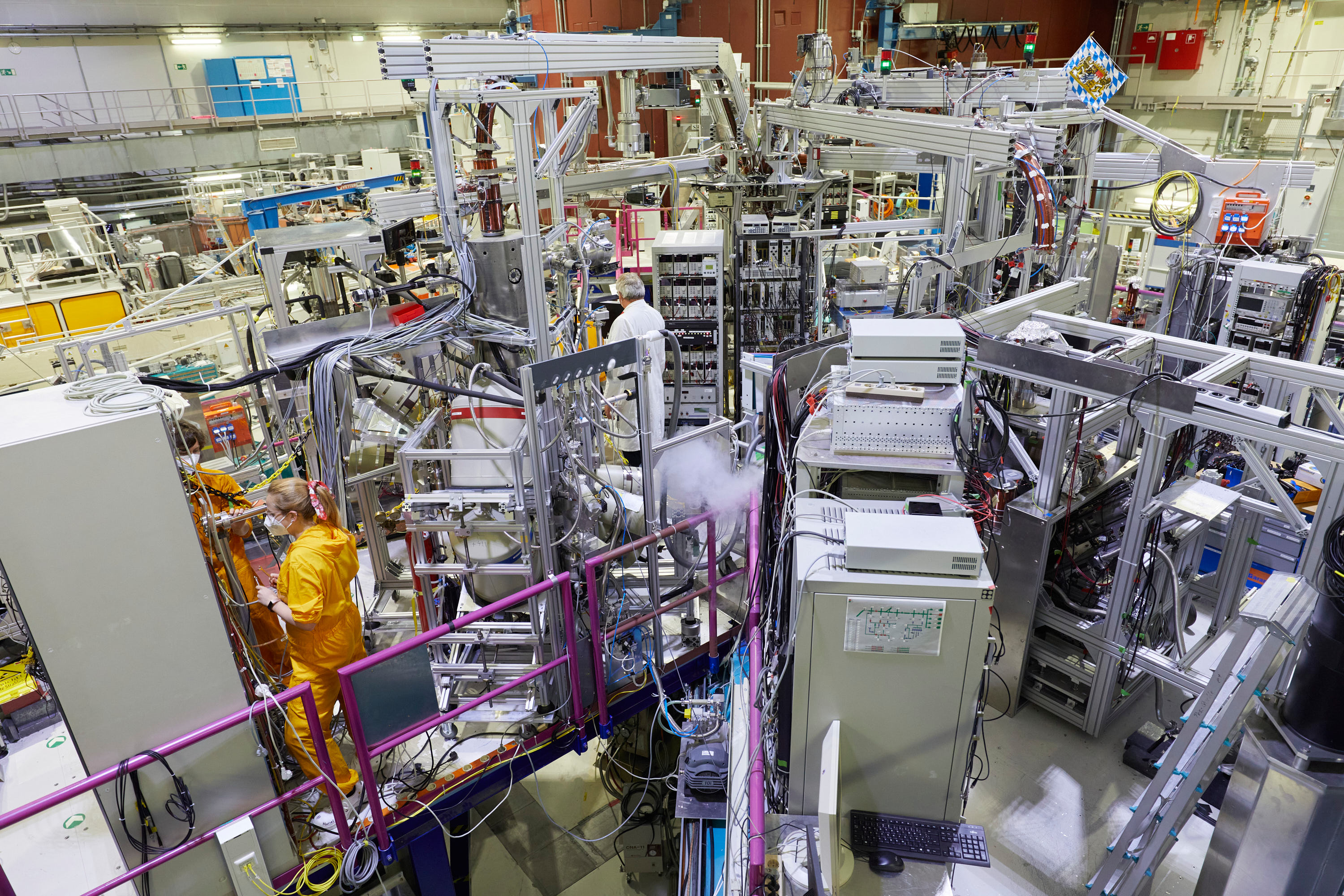
The positron instruments in 2021 - still in the Experimental Hall. They are currently being moved to the Neutron Guide Hall East. © Bernhard Ludewig, FRM II / TUM
Three further positron projects are being led by the University of the Bundeswehr (UniBw) Munich. One involves Dr Werner Egger developing and constructing a pulsed positron beam system (L-PLEPS), which is intended to be accessible also to industry for the investigation of defects in thin films of semiconductors and membranes.
With micrometre-level precision, the scanning positron microscope can detect defect distributions in samples. Project leader Prof. Dr Günther Dollinger from UniBW Munich explains: “Our aim is to significantly improve the resolution and performance of the scanning positron microscope.”
Positrons from NEPOMUC also play a central role in the collaborative project “PosiLac”, led by Dr Michael Mayerhofer of the UniBW Munich and Dr Robert Heine of Johannes Gutenberg University Mainz. The funding will be invested in the 3D printing of a high-frequency resonator.
Two upgrades at RESEDA
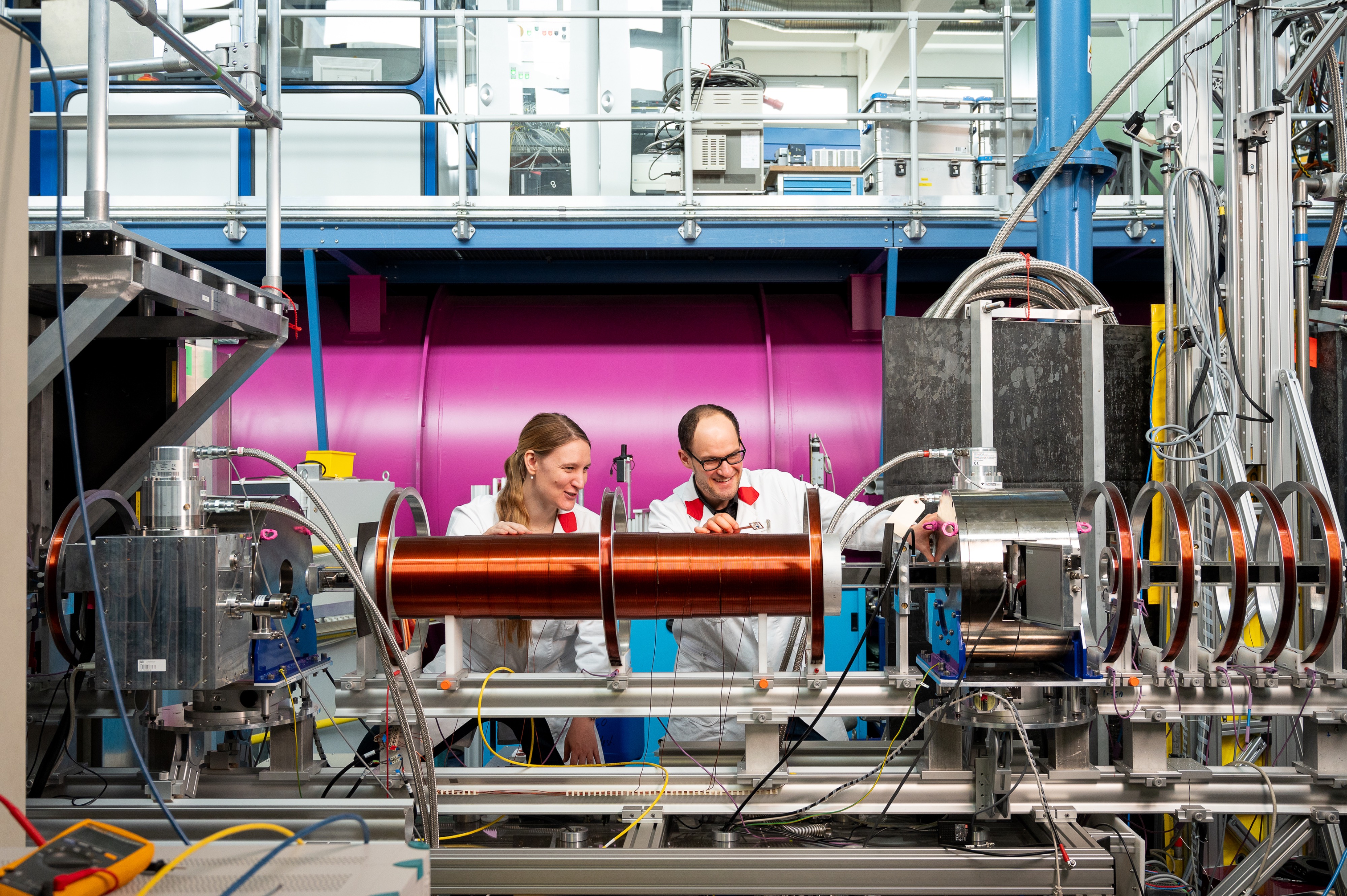
Johanna Jochum und Lukas Beddrich doing instrument scientist's stuff. © Astrid Eckert, FRM II/ TUM
Dr Johanna Jochum from FRM II at TUM is responsible for two of the new projects at the RESEDA neutron resonance spin echo spectrometer, with a total of 1.8 million euros. “The TIGER project aims to equip RESEDA for operation with thermal neutrons,” explains Johanna Jochum, who heads the RESEDA instrument team. The second project focuses on integrating focusing neutron optics into RESEDA particularly for small samples or measurements under pressure.
Test platform for electrolysis cells
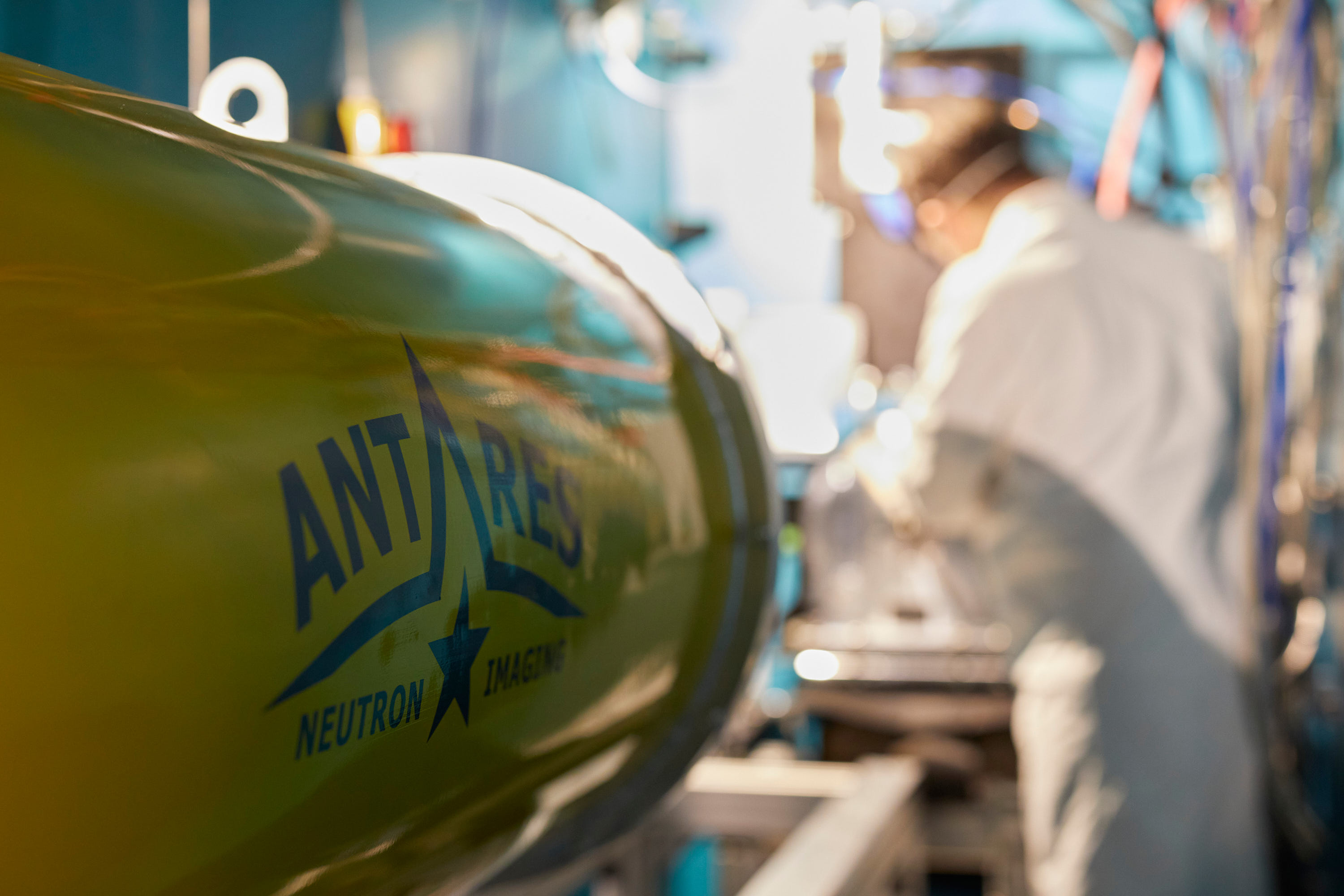
Working at ANTARES. © Bernhard Ludewig, FRM II / TUM
“To monitor the water level in electrolysis cells accurately, we need to examine the cell as it is operating. Thanks to a grant of €670,000, we can develop such a test setup for the instrument ANTARES explains Dr Michael Schulz, Deputy Scientific Director at FRM II. The project is led by Dr Joey Disch at the University of Freiburg.
Neutrons in cancer therapy
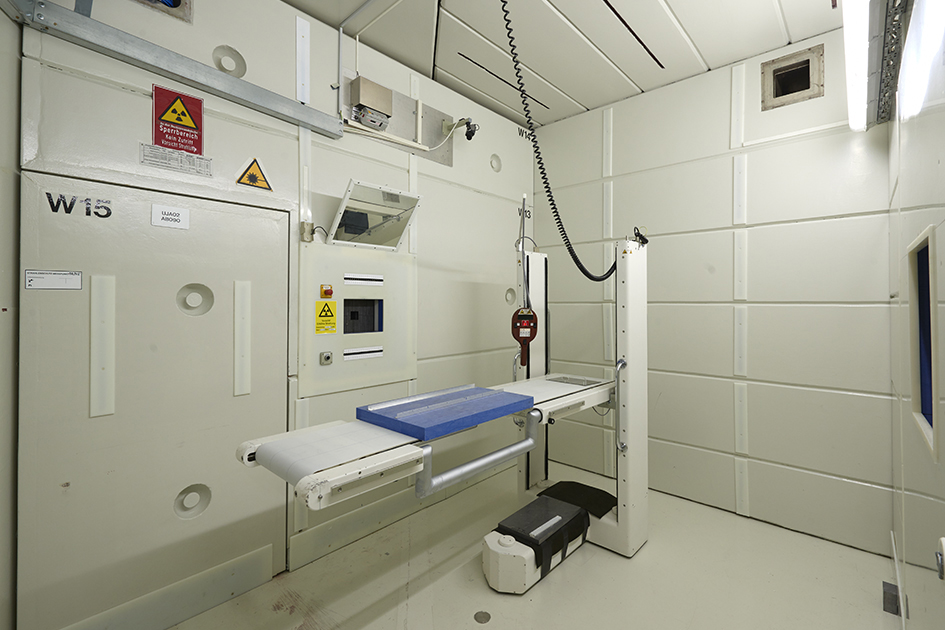
The irradiation room of MEDAPP. © Wenzel Schürmann, FRM II/ TUM
Medical research also benefits from €500,000 funding. “We can now investigate and further develop the boron-neutron capture at the MEDAPP instrument – and thus contribute to making this form of therapy more targeted and precise,” says Dr Tobias Chemnitz, project leader and instrument scientist at MEDAPP.
Naomi Dieng (MLZ)
Instruments
» News from LaDiff» TOPAS - under construction
News from LaDiff
LaDiff is our new triple-axis spectrometer with a Larmor diffraction option. We are currently in the construction phase and aim to complete the instrument in time for the arrival of neutrons.
But it is not completely new in the neutron world: The cold three axis spectrometer FLEXX from BER 1 (HZB) had been transferred to Garching to start a second life of scientific use at the MLZ.
Need for a biological shielding
Due to the proximity of the instrument to the visitors’ gallery and the offices in the Neutron Guide Hall West (former MIRA location), a large biological shielding is being constructed. We have just completed the stainless steel structure and are now proceeding with the lead shielding to “decorate” our steel framework.


Upgraded monochromator shielding
The monochromator shielding from the FLEXX TAS instrument has been upgraded and is being reused at LaDiff, fed by the NL6 neutron guide. The new placement of the monochromator shielding at its final location has been completed, and the neutron guides’ vacuum has been successfully tested and is now ready to receive neutrons.
Tests on the multianalyser
In parallel, and in close collaboration with our Detector Group, we have carried out tests on the multianalyser / detector array, also inherited from FLEXX. This multianalyser serves as an optional component for the secondary spectrometer, particularly useful when rapid mapping of dispersions in (Q, ω) is required by our users.
We continue working intensively to bring the project to completion and are very much looking forward to the restart!
Markos Skoulatos (MLZ)
TOPAS - under construction
The construction works at TOPAS are going at full steam! For the past few years, the instrument has been assembled and installed in the Neutron Guide Hall East, and will add new possibilities to the suite of the MLZ instruments by means of time-of-flight (TOF) spectroscopy with thermal neutrons. The ambitious goal for the instrument is to allow for polarization analysis, a challenging task for the TOF technique.
Follow TOPAS' story in the gallery
There is a lot going on at TOPAS. In the gallery you can see some snapshots comparing the state a year ago and today. They clearly illustrate how many components and kilometers of cables go into assembling a complex instrument. Last year the neutron choppers were installed at TOPAS, the heart of the instrument. The set of two Fermi choppers and one disc chopper rotate at high frequencies at a synchronized rate to provide neutrons with the required energy.


Next stop: Hot commissioning
This year, TOPAS entered the crucial stage of cold commissioning. It involves testing the instrument’s main components without neutrons. The choppers were spun at high vacuum, which they require for high-frequency operation. Equally important, the detector tubes were tested by performing background measurements. Now we put all the components together to act as a single instrument: TOPAS. So far so good, the commissioning is going according to the established plan, and we are getting ready for hot commissioning with neutrons, when the reactor restarts.
Michal Stekiel (JCNS@MLZ)
People
» We take our hats off to Karl Zeitelhack!» Newly arrived
We take our hats off to Karl Zeitelhack!
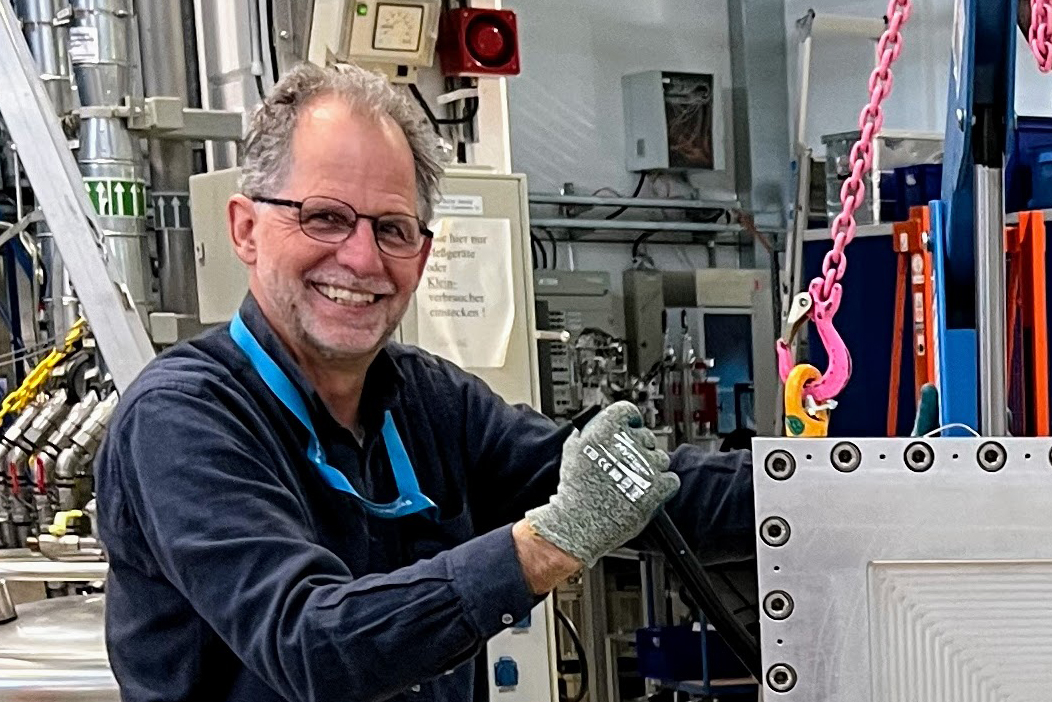
© MLZ
After 26 years leading the FRM II detector group, Karl Zeitelhack entered his well-deserved retirement at the end of January.
Karl founded the FRM II detector group in 2000, having previously worked on detector development for heavy-ion physics at the TUM Physics Department just across the road. In the early years he built the group from the ground up, establishing the personnel and infrastructure that would support detector development at FRM II for decades.
Alongside this, Karl played a key role in setting up many of the first instruments at FRM II. Following the start of the reactor in 2004, he led the flux measurements from the cold source, an important milestone in commissioning the facility.


Throughout his career, Karl worked to strengthen collaboration between detector groups worldwide, building an excellent international network that continues to this day. A central element is the International Collaboration for the Development of Neutron Detectors (ICND), which Karl chaired from its inception in 2010. The group also participated in the European FP6 and FP7 programmes for neutron detector development.


Under his leadership, the detector group began its programme of large in-house detector production, starting with the Stress-Spec MWPC and later developing large-area curved detectors for ERWIN and DMC at PSI. Most recently, a vertically curved detector for Stress-Spec has entered production.


Karl said farewell to colleagues at an extremely well-attended reception, reflecting the respect and appreciation he has earned over the years. We thank Karl for his many contributions and wish him all the very best for the future.
Alan Howard (MLZ)
Newly arrived
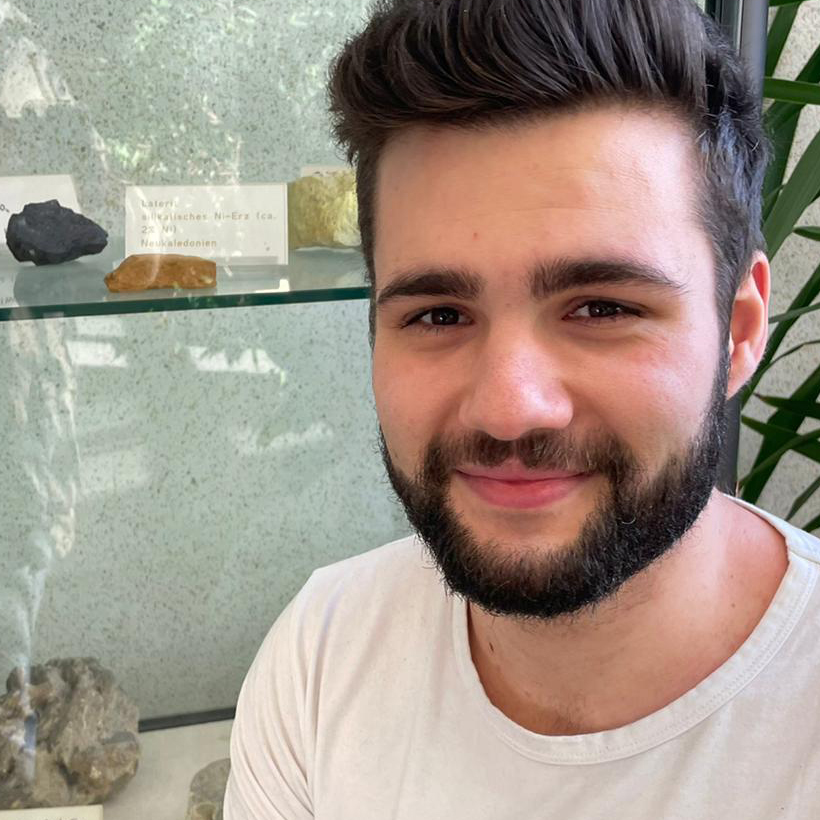
Noah Nachtigall
© private
I am Noah, the new first instrument scientist for POWTEX. I will take part in its commissioning, ensure everything works when neutrons arrive, and continue advancing the AIXtal analysis suite (https://doi.org/10.5281/zenodo.15094877).
My involvement with POWTEX began with a student project on the instrument’s neutron guide about nine years ago and has stuck with me ever since. After years of theoretical work and development (https://doi.org/10.3390/qubs8040030, https://doi.org/10.18154/RWTH-2025-10487, https://doi.org/10.1107/S1600576723002819) I am thrilled to finally see the instrument actually running!
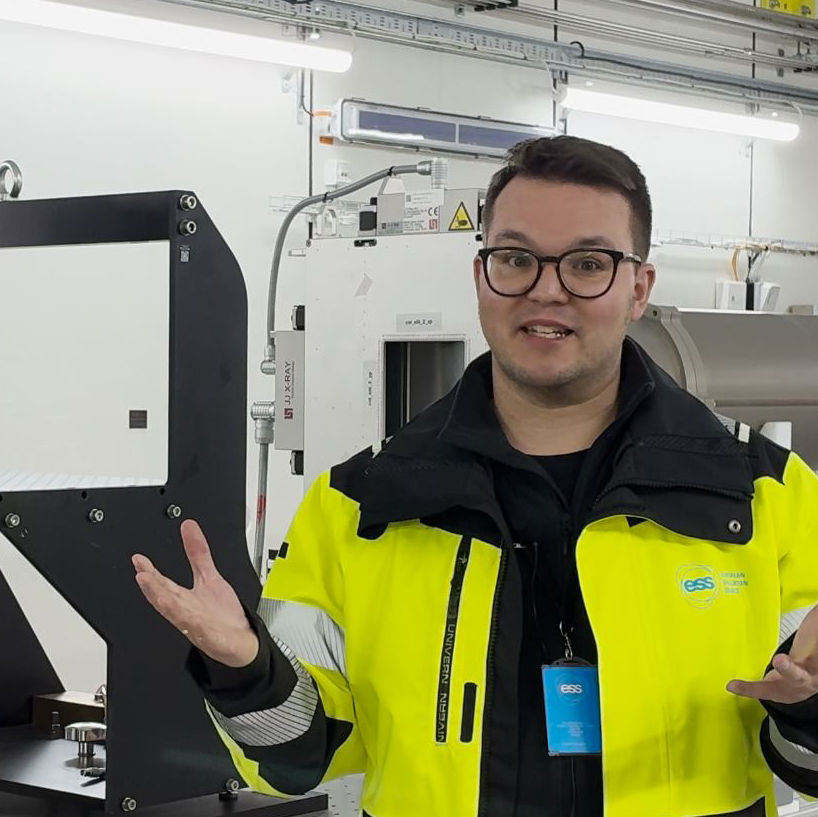
Robin Woracek
© ESS
Hej! I am Robin and excited to have joined the neutron imaging team at MLZ as the new group leader. With a background in engineering and materials science, I bring perspectives from nine years at the University of Tennessee / ORNL and 11 years at ESS, including a five-year secondment to HZB.
I look forward to leveraging synergies on the TUM campus to advance neutron imaging and connect it more closely with scattering techniques. Looking forward to meeting y’all!
Want to know more about me? Find the list of my publications at Google Scholar.
Users
MLZ Users reloaded
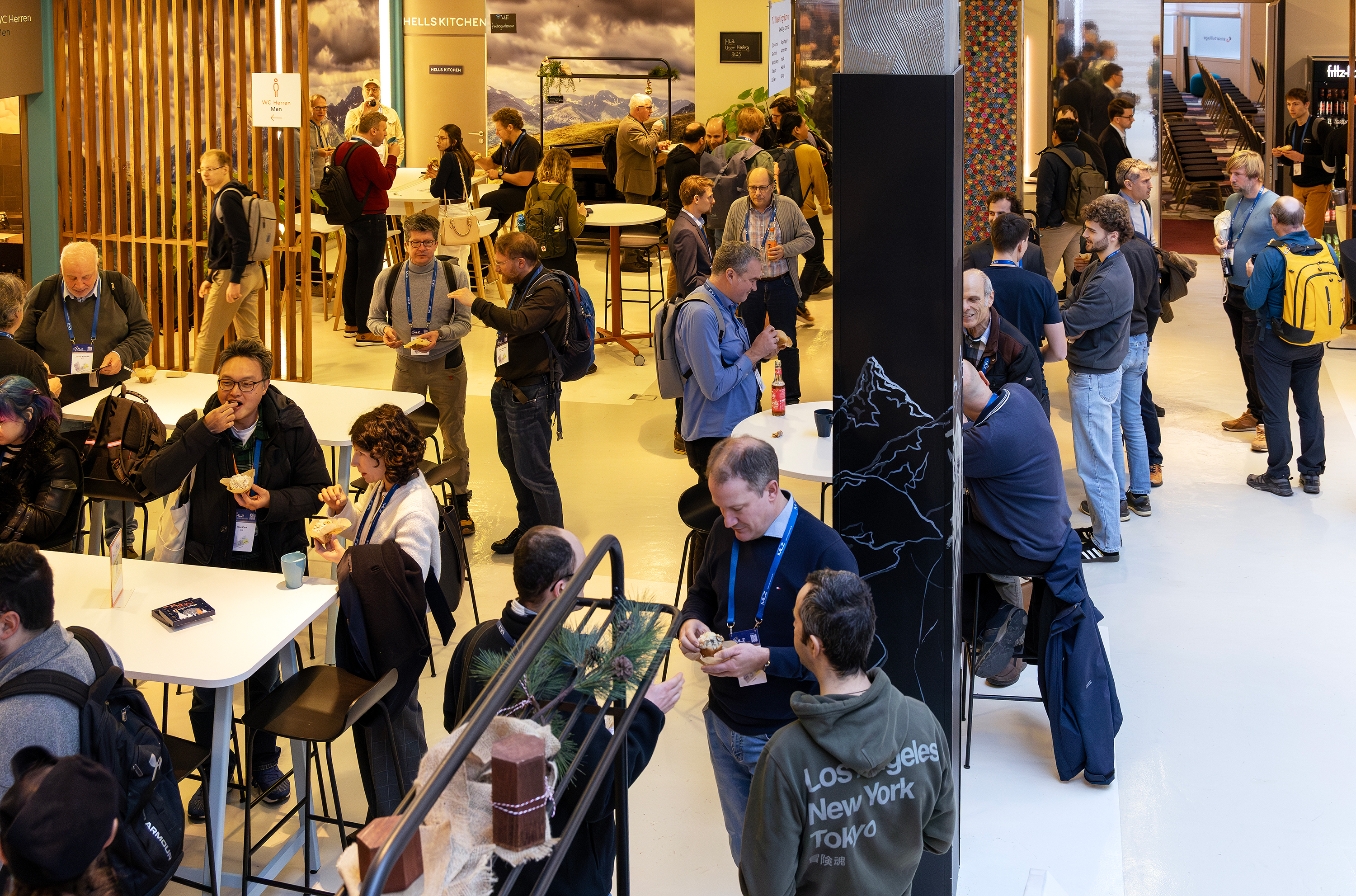
Participants mingling. © MLZ
232 MLZ users took up the invitation to the User Meeting in December. Not only did they have to travel to a new venue, they also found themselves in a new setup. Instead of the usual hotel, we moved to a colourful conference centre with a ping pong table! We also said goodbye to the seven parallel workshops on the first day, which meant that we were able to start with a warm welcome from the MLZ directors.
Update by the MLZ Directors and news about the Big Bang
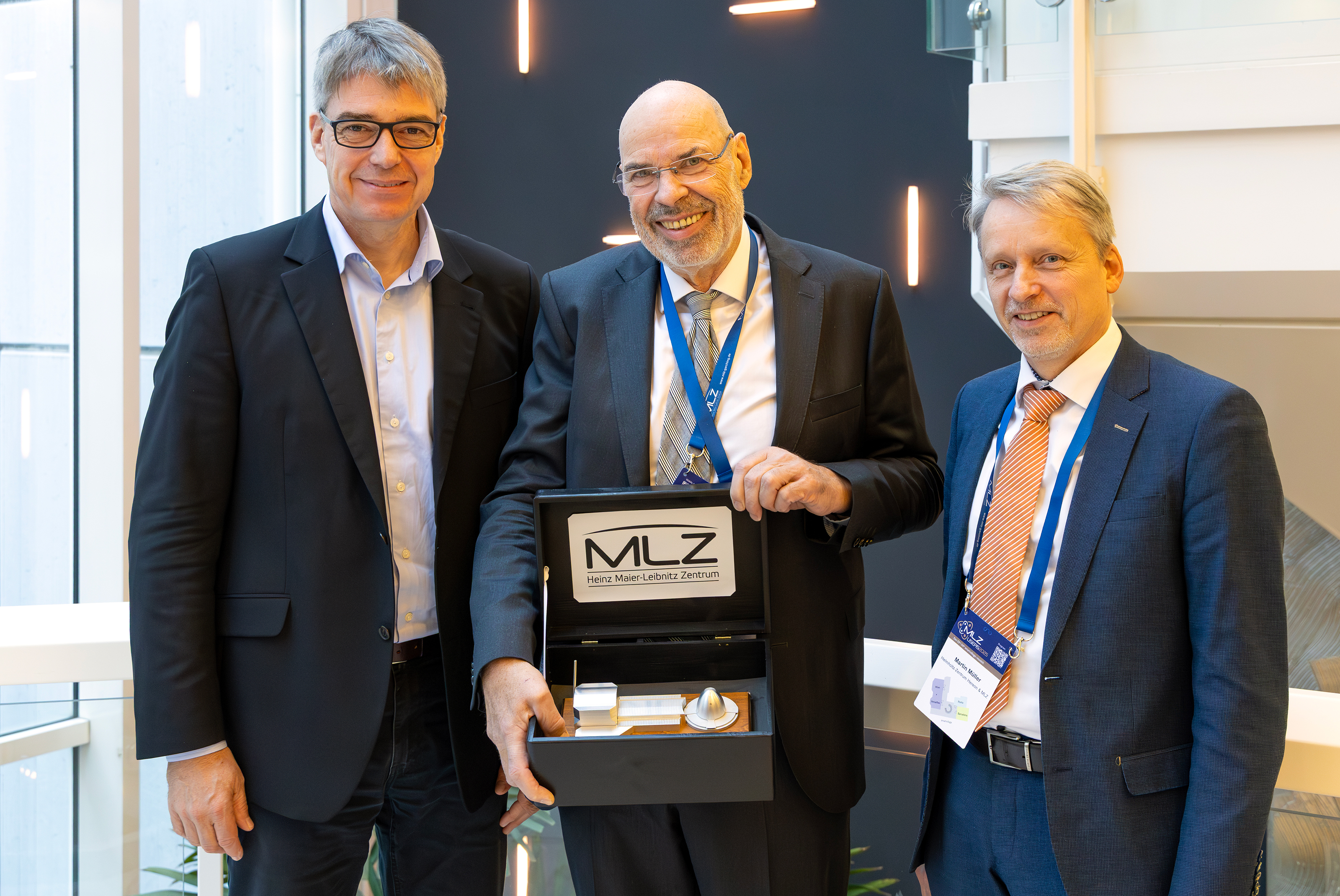
Stephan Paul (centre) with the MLZ Prize, surrounded by MLZ Directors Christian Pfleiderer (left) and Martin Müller (right). © MLZ
They updated the participants on the current status of FRM II in relation to the planned restart, after which they presented the 2025 MLZ award to Stephan Paul of TUM. In his awardee talk, he took the participants back to the moments immediately following the Big Bang. In the afternoon, three parallel sessions covered topics such as structural chemistry, hydrogen-metal interactions, and polymers and proteins. In the evening, a traditional Bavarian dinner ensured a good atmosphere and plenty of conversation
Thrilling scientific talks
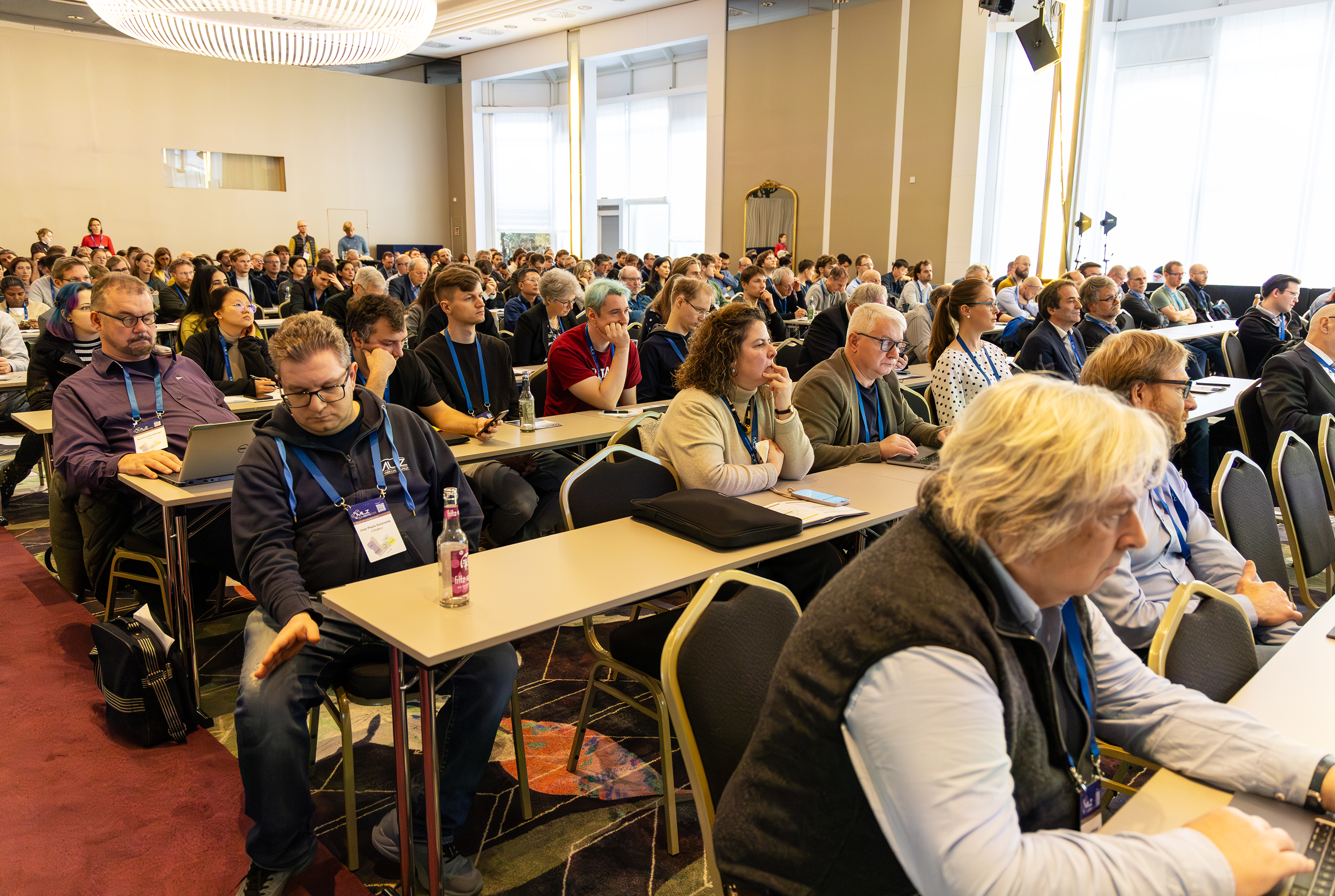
An attentive audience during the talks. © MLZ
The second day began with two scientific plenary talks. Hanna Barriga (KTH Stockholm) discussed lipid nanoparticles and their characterisation. The aim is to help design these complex little helpers for drug delivery. Jasper Landman (University of Wageningen) captivated the audience with his work on the superstructures of pulse proteins.
Preparations are underway
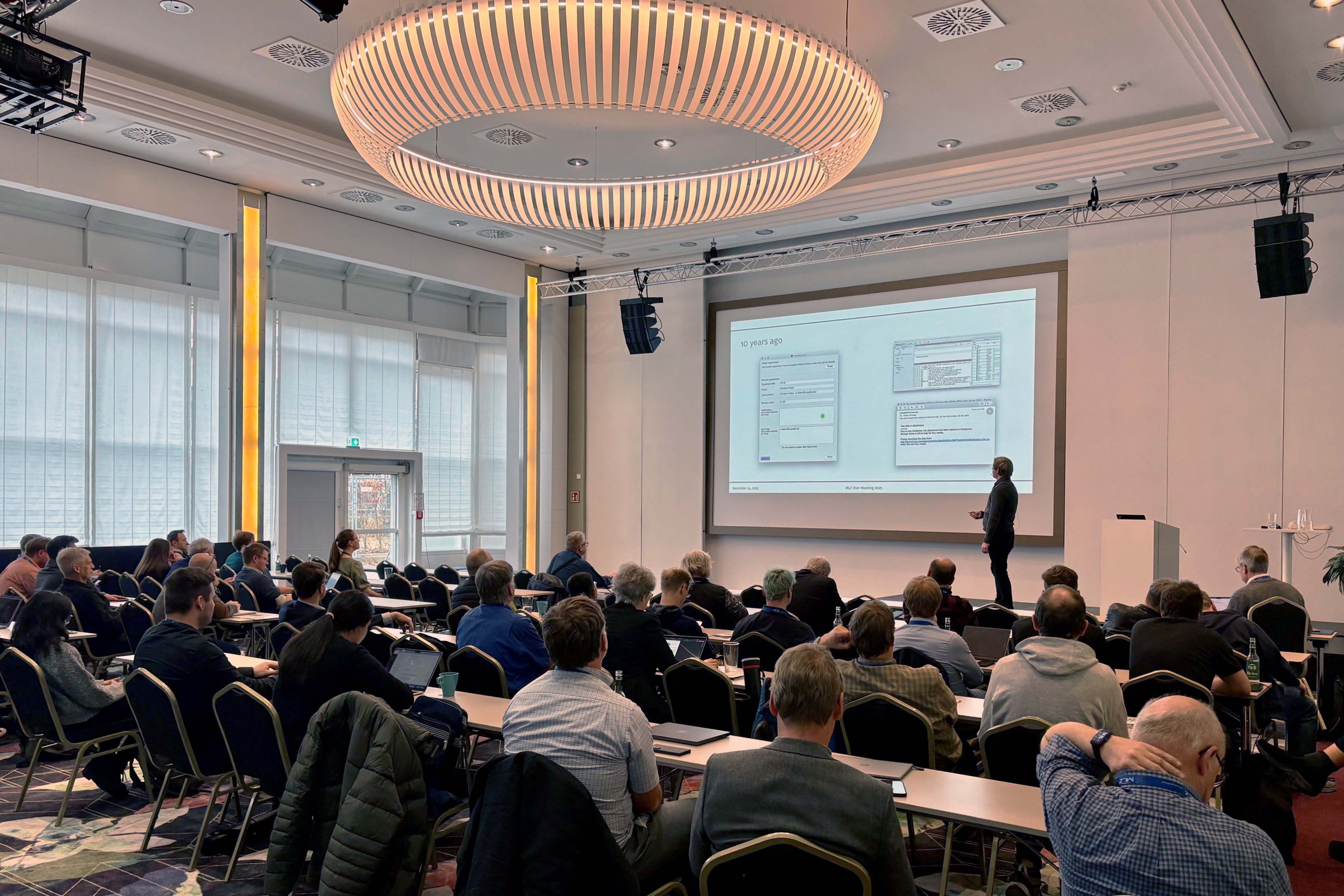
Christian Felder presenting the evolution of data management at MLZ. © FRM II/ TUM
The second part of the morning session was dedicated to preparations for the restart. Here, different groups presented their approaches. Manuel Suárez Anzorena (MLZ), head of the Sample Environment Group, presented the ongoing equipment tests to ensure the instruments are ready for use. Anatoly Senyshyn (MLZ) talked about the diffractometer group and their different approach. While SPODI is a well-known workhorse, ERWIN and FIREPOD will need to be commissioned. Henrich Frielinghaus (JCNS@MLZ) then described the situation with the SANS machines, which will indeed be affected by the absence of the cold source, and presented ideas on how to manage this situation. Christian Felder (JCNS@MLZ) concluded the session with a live demonstration of the new data management workflow. This involves automated data acquisition via the NICOS instrument control system, an Electronic Lab Notebook, and the option to download all data. The login and access to this workflow is realised via GhOST, which makes things much more convenient for users!
Poster + beer = good atmosphere!
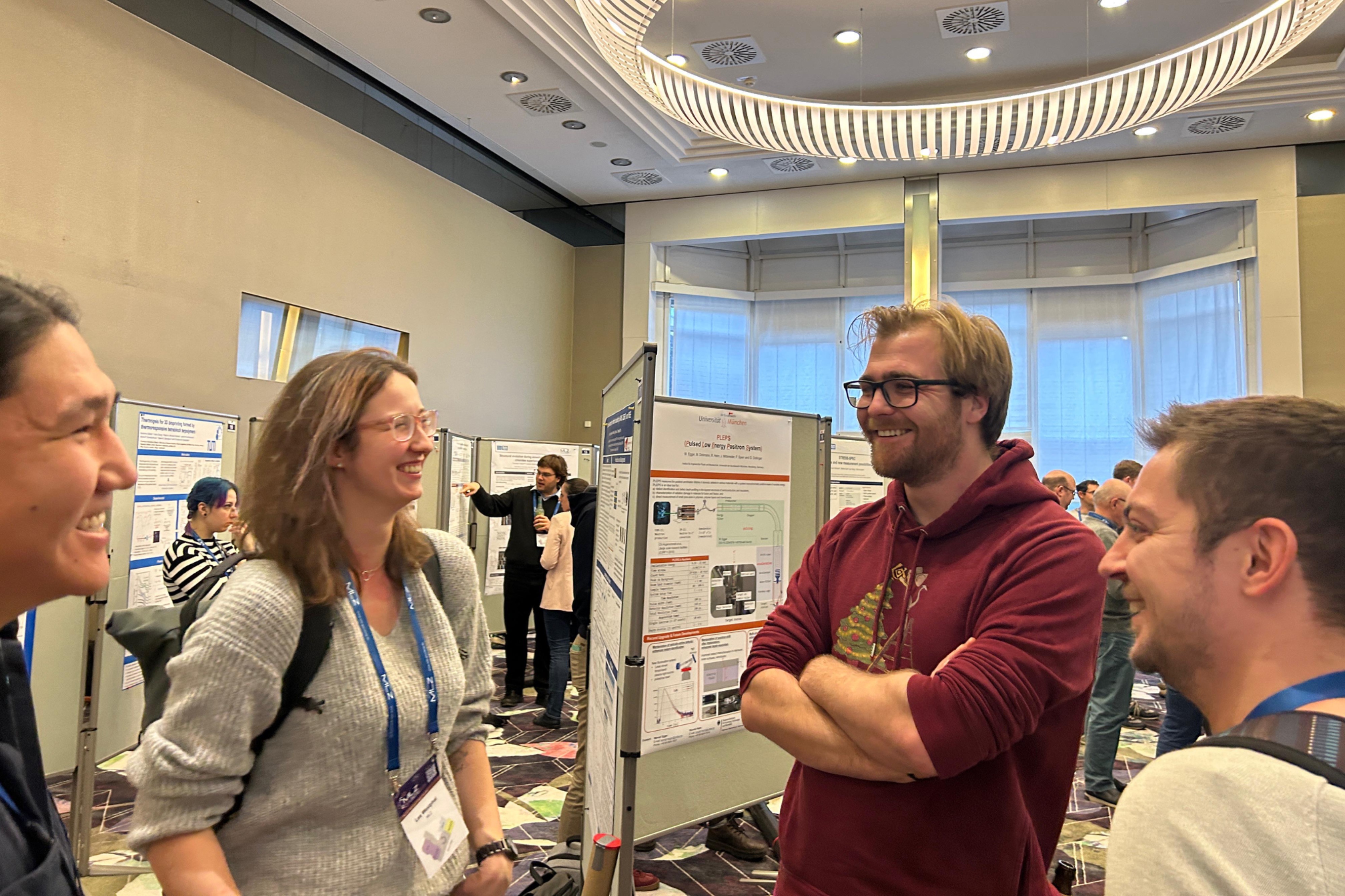
Lively discussions during the poster session. © MLZ
The User Meeting ended with the traditional poster session. There, it was great to finally have beer again, as the last few didn’t offer any. It created a relaxed atmosphere to talk to people and plan future collaborations.
Welcome to the MLZ Newsletter!
The MLZ Newsletter is sent directly to your inbox. All our users are invited to subscribe to it via GhOST!
You aren’t a scientific user but interested? Then just send an email to the MLZ User Office!
Upcoming deadlines
- Deadline: March 31st, 2026
- Munich, May 19th-22nd, 2026
- Registration: April 30th, 2026
- Jülich and Grenoble, Sept 07th-18th, 2026
- Registration: May 03rd, 2026
- Garching, June 15th-19th, 2026
- Early Bird: March 31st, 2026
- Posters: May 31st, 2026
- Munich, July 06th-09th, 2026
- Early Bird: May 17th, 2026
- Abstracts: May 04th, 2026
- Tutzing, Oct 06th-09th, 2026
- Registration: Sept 15th, 2026
- Abstracts: June 21st, 2026
MLZ is a cooperation between:
> Technische Universität München> Helmholtz-Zentrum Hereon
> Forschungszentrum Jülich
MLZ is a member of:
> LENS> ERF-AISBL
MLZ on social media: